
Earthquakes
- are closely related to the movement of the Earth's plates.
-As the earth plates moves, they press against each other and the pressure builds until one plate splits past another plate.
Faults
-cracks produced by the movement of the plates.
Focus/Hypocenter
-the point where the pressure is relieved.
Epicenter
- the point on the Earth's surface directly above the focus.


Vibrations or shock waves are sent out in all directions from the focus. Smaller waves are often sent out after the earthquake. These are called aftershocks.
Types of Plate Movements:
1.Divergence
-occurs when 2 plates move away from each other. It takes place at the boundary of the oceanic plates, and forms a new seafloor ----> seafloor spreading process.

2. Convergence
-occurs when 2 plates move toward each other.The 2 plates,,thus, collide. The impact of their collision destroys some parts of the crust.

3 Types of Convergence:
a. between a continental plate and an oceanic plate
> a thin oceanic plate collides with a thick continental plate, resulting in the sinking of the oceanic plate under the continental plate ---> subduction process.

b. Between 2 oceanic plates
- 2 oceanic plates collide,resulting in the subduction of one beneath the other. Magma from the mantle rises, forming volcanoes.

c. Between 2 continental plates
 - two continental plates collide, resulting in the slight forcing of one plate under the other, but suduction does not take place.

3. Lateral Slipping
 - occurs when 2 plates move sideways against each other. The movement is not smooth due to friction and 2 plates get stuck. Pressure builds up and when suddenly released, the plates jerk apart. This results an earthquake.
- are closely related to the movement of the Earth's plates.
-As the earth plates moves, they press against each other and the pressure builds until one plate splits past another plate.
Faults
-cracks produced by the movement of the plates.
Focus/Hypocenter
-the point where the pressure is relieved.
Epicenter
- the point on the Earth's surface directly above the focus.
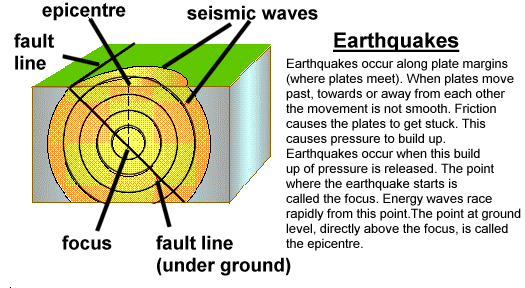
Vibrations or shock waves are sent out in all directions from the focus. Smaller waves are often sent out after the earthquake. These are called aftershocks.
Types of Plate Movements:
1.Divergence
-occurs when 2 plates move away from each other. It takes place at the boundary of the oceanic plates, and forms a new seafloor ----> seafloor spreading process.

2. Convergence
-occurs when 2 plates move toward each other.The 2 plates,,thus, collide. The impact of their collision destroys some parts of the crust.

3 Types of Convergence:
a. between a continental plate and an oceanic plate
> a thin oceanic plate collides with a thick continental plate, resulting in the sinking of the oceanic plate under the continental plate ---> subduction process.

b. Between 2 oceanic plates
- 2 oceanic plates collide,resulting in the subduction of one beneath the other. Magma from the mantle rises, forming volcanoes.

c. Between 2 continental plates
 - two continental plates collide, resulting in the slight forcing of one plate under the other, but suduction does not take place.
3. Lateral Slipping

